The audience for a live event is no longer limited to the people standing in the room. A premiere, brand launch, performance, creator event, red carpet, or media moment may reach thousands or millions more people through livestreams, social media, press coverage, recap edits, and short-form content.
That means production has to work on two levels at once: as a compelling live experience and as a camera-ready environment built for content.
VOX Productions produces broadcast-ready entertainment, brand, and media events across Los Angeles and the West Coast. Together with Wizard Studios on the East Coast, clients can also access national production capabilities that support consistent live, broadcast, and content-driven programs across both coasts.
Producing Events for the Live Audience and the Camera
A live event can feel incredible in person and still fall flat on camera if the production is not planned with capture in mind.
Lighting may be too dark for video. Scenic elements may create awkward backgrounds. Guests may block key sightlines. Audio that works in the venue may not translate cleanly to a livestream. A red carpet may look polished to attendees while creating difficult positions for photographers and camera crews.
Broadcast-ready production solves those issues before they become problems.
The production plan should consider camera positions, lens lines, scenic framing, lighting levels, audio feeds, talent movement, interview zones, presentation content, stage blocking, playback, and the needs of both traditional and social-first media.
Livestreams That Feel Like the Event, Not an Afterthought
A livestream should feel connected to the live experience rather than like a camera placed in the back of the room.
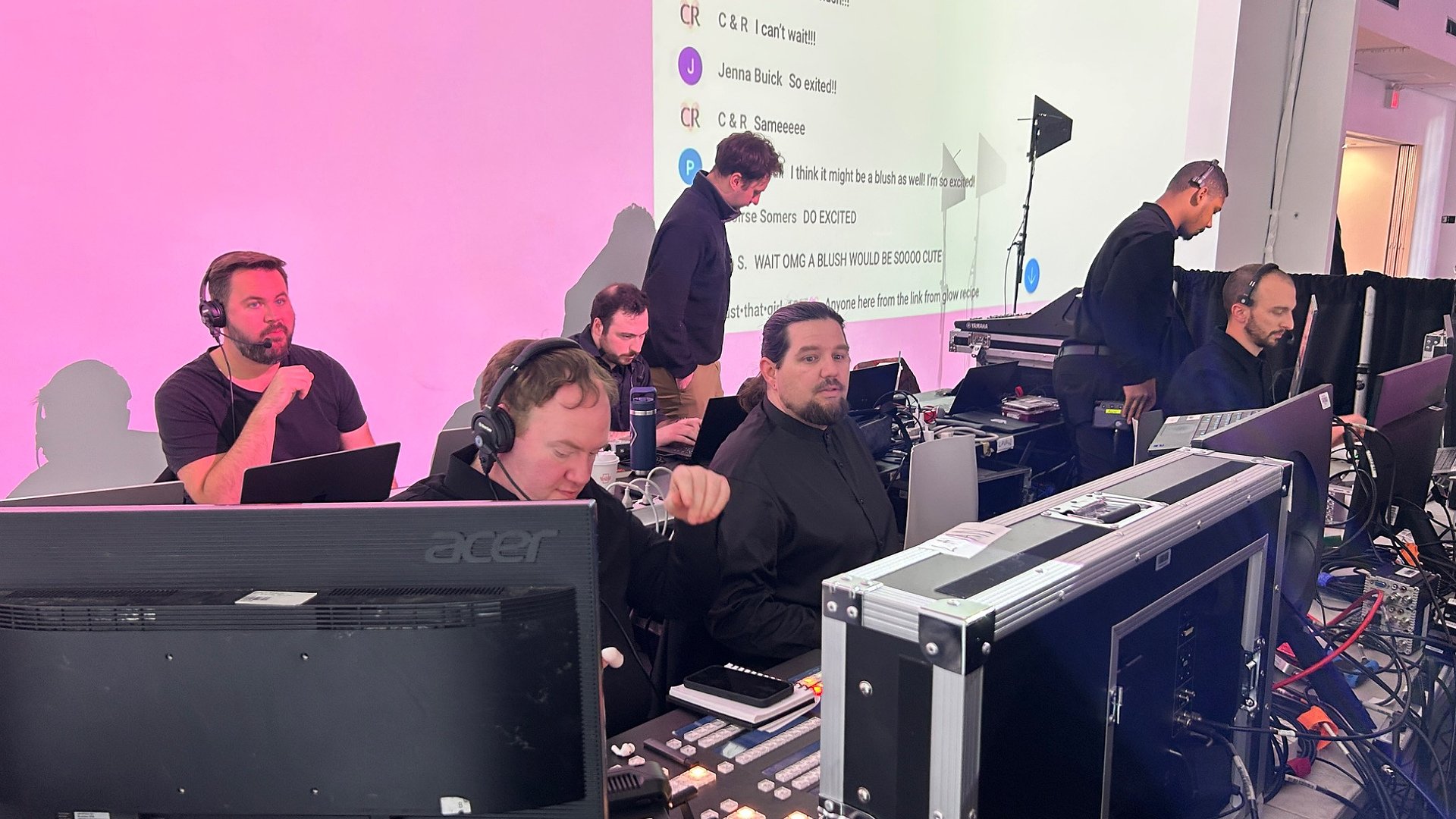
That may require multiple cameras, switched feeds, branded graphics, clean program audio, dedicated hosts, remote contributors, pre-produced video, lower thirds, audience reactions, and backstage or red-carpet content.
For entertainment and brand events, the livestream can also become its own programming layer. Viewers may see interviews or behind-the-scenes moments that are not visible to the audience inside the venue.
Production teams need to coordinate the run of show for both experiences so the live event continues naturally while the broadcast maintains its own rhythm.
Red-Carpet Coverage and Media Moments
Red carpets are highly visible but operationally complex.
Talent arrivals, photographers, press outlets, interview teams, brand partners, security, lighting, signage, and guest movement all compete for limited space. Every camera needs a useful angle, but the arrival experience still needs to feel controlled and premium.
Production may include step-and-repeat environments, lighting optimized for photography and video, media risers, press lanes, interview positions, audio distribution, scenic entry moments, credentialing, and dedicated talent routes.
When the red carpet is treated as a broadcast environment rather than simply an entry point, it can generate strong content while protecting the guest and talent experience.
Performances Built for Both Stage and Screen
Performances introduce another layer of complexity because lighting, sound, scenic, cameras, and talent all need to work together in real time.
The room may need dramatic lighting and immersive energy while camera teams need consistent exposure and clean angles. Audio may require a separate broadcast mix. Performers may need blocking that supports the live audience while also giving camera operators clear shots.
Production planning can include camera rehearsals, lighting cues, backline, playback tracks, stage resets, scenic transitions, performer entrances, intercom, show calling, and isolated audio recording.
When those systems are coordinated, the performance feels intentional from every seat and every screen.
Creator Content and Social-First Capture
Social content has changed what camera-ready means.
A traditional broadcast may prioritize widescreen framing, while creators are capturing vertical video from phones. Sponsors may need short-form content. Talent may be filming backstage. The brand may want same-night social edits. Press teams may need interview clips immediately.
Production should account for those needs from the beginning.
That can mean creating dedicated creator zones, vertical-friendly scenic moments, clean backgrounds, strong front lighting, interview areas, accessible power, audio feeds, and clear content sightlines.
A well-produced environment gives multiple content teams what they need without turning the event into a film set.
Media Moments That Need to Move Fast
Media-driven events often operate on tight timelines. Press previews, announcements, product reveals, creator events, and entertainment moments may need content distributed while the event is still happening.
That puts additional pressure on production workflows.
Teams may need to coordinate camera capture, recording, media feeds, file transfer, lighting, press access, interview timing, sponsor requirements, and social content simultaneously.
The more these workflows are planned in advance, the easier it becomes to produce content quickly without disrupting the live event.
Scenic and Lighting That Work Through a Lens
A camera sees an event differently than the human eye.
Bright LED walls, reflective materials, dark scenic surfaces, saturated colors, and moving lights can all behave differently on video. The production team needs to consider how scenic materials, screens, lighting, and brand graphics will reproduce on camera.
For creator events and entertainment programs, this can be especially important because the event may ultimately be seen by more people through photos and video than in person.
Producing scenic and lighting with both audiences in mind helps protect the visual identity of the event across every channel.
National Broadcast Capabilities From Los Angeles to New York
For brands, agencies, entertainment companies, and media teams working nationally, broadcast consistency matters.
A creator program may launch in Los Angeles and continue in New York. A brand may need the same livestream standards for events on both coasts. A multi-city campaign may require consistent camera workflows, graphics, audio, scenic, and content capture even when every venue is different.
The combined capabilities of VOX Productions and Wizard Studios help support that need. With experienced production resources on both coasts, clients can build repeatable technical standards and content workflows while still adapting to the realities of each market.
Los Angeles may bring entertainment venues, studios, outdoor locations, and talent-driven events. New York may bring corporate environments, dense urban venues, executive programming, and high-profile media moments. A national production approach connects those strengths instead of treating each market as a separate system.
One Production Platform for Live, Broadcast, and Social Audiences
The most effective broadcast-ready events are not produced for one screen or one room. They are built to perform across multiple audiences at once.
The live guest needs energy and atmosphere. The livestream viewer needs clear storytelling. The camera needs strong lighting and framing. The creator needs content opportunities. The sponsor needs visibility. The brand needs footage that can continue working after the event.
VOX Productions brings experience in livestreams, red carpets, performances, creator content, media moments, staging, lighting, audio, video, and technical production across Los Angeles and the West Coast. Together with Wizard Studios on the East Coast, clients can access a broader national production platform for programs that need to move seamlessly between live experience and broadcast content.
For brands and agencies planning media-facing events, the strongest production strategy begins long before the cameras turn on. It begins by producing the event so every important moment is ready to be experienced, captured, and shared.